
Climate science is too new a discipline to be taken seriously. It only started in the 1970s.
Fact:
Climate science is not new at all. In fact, it’s been around for almost 200 years.
The French physicist Joseph Fourier, who developed the Law of Heat Conduction, first postulated the idea of a greenhouse effect in 1824, as a way of explaining why the Earth was not a ball of ice. Something in the atmosphere was trapping infrared radiation, but he did not know what.
Another French physicist, Claude Pouillet, demonstrated that some infrared radiation was not returning to space. In 1838 he speculated that this might be because it was being trapped by CO2 and water vapour.
Then, in 1856 the American scientist Eunice Foote demonstrated that CO2 was responsible for trapping heat in the atmosphere. Six years later, the Irish physicist John Tyndall reached the same conclusion, adding that methane was also a greenhouse gas.
In 1896, the Swedish physical chemist Svante Arrhenius concluded that human activity was heating up the planet. Ten years later he calculated that a doubling of CO2 would result in a 4°C increase in global surface temperatures – a figure that is very close to modern day predictions. [Arrhenius won the Nobel Prize for Chemistry in 1903.]
Finally, in the 1930s the English meteorologist Guy Stewart Callendar gathered global CO2 and temperature measurements from around the world over a 50-year period and demonstrated that both were rising, and that the likely cause of the latter was the increase in the former. His experiments suggested that at least half of the temperature rise to that point was attributable to human activity. This was the first time anyone had suggested that humans were causing global warming. Callendar calculated that a further temperature increase of 2°C might act as a ‘tipping point’ for increases that would be irreversible. [It was another 40 years before scientists had the instruments needed to prove Callendar right.]
Hence, climate science is not a recent development. It has been a part of modern science for as long as Darwin’s theory of evolution and longer than Einstein’s theory of relativity.
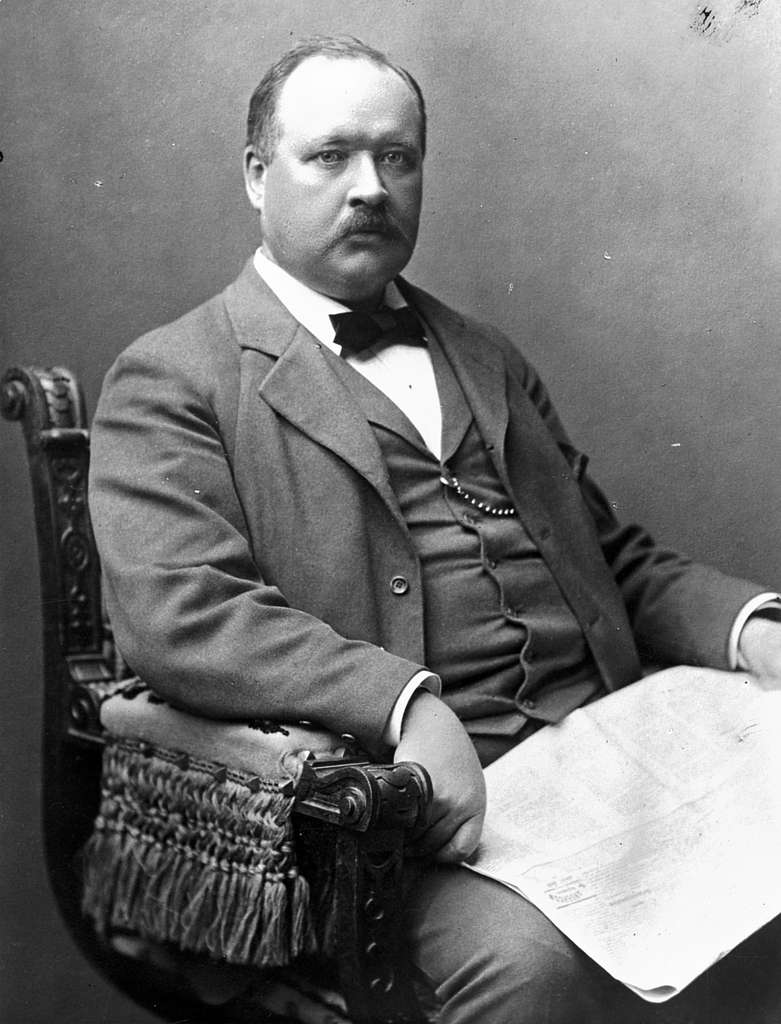
Swedish physicist Svante Arrhenius [Source: PICRYL]