
Australia has a lot of untapped oil. It would be better off using this than electrifying its road transport.
Fact:
Australia has about 1.8 billion barrels of oil remaining in its existing oil fields – enough to supply the country’s needs for 4 years without imports. There are also believed to be between 13 and 18 billion barrels of shale oil in Queensland and another 5 billion barrels of conventional oil beneath the Great Australian Bight.
Let’s start with shale oil. This type of oil is expensive to produce and would cost motorists as much as double what they normally pay for petrol. It would also take between 5 and 10 years to set up a shale oil industry, and double that time to scale it up to the level needed to provide for Australia’s needs. Without massive government subsidies, the private sector would not be prepared to invest in this industry.
As for the oil in the Great Australian Bight, unfortunately it’s about 400 kilometres offshore, where the ocean floor is between 1,000 and 2,200 metres deep. The sea floor in Bass Strait, by contrast, is at depths of between 50 and 400 metres, so the oil below has been relatively cheap and easy to exploit. The oil in the Bight would be significantly harder to extract, meaning it would cost a great deal more at the bowser. This is why the three companies that had exploration rights there abandoned plans to drill a decade ago.
Of course, those who are pushing to ‘drill, baby, drill’, will argue that with the price of oil being higher following the war with Iran, Australia’s untapped sources will be more economic. That might have been true once, but today there are cheaper alternatives than oil for transportation – namely, EVs – so if the price stays high, more people will go down the electrification path, thereby reducing the demand for oil. It’s a no-win situation for potential investors. Whichever way the price moves, there is no incentive to exploit Australia’s untapped oil reserves.
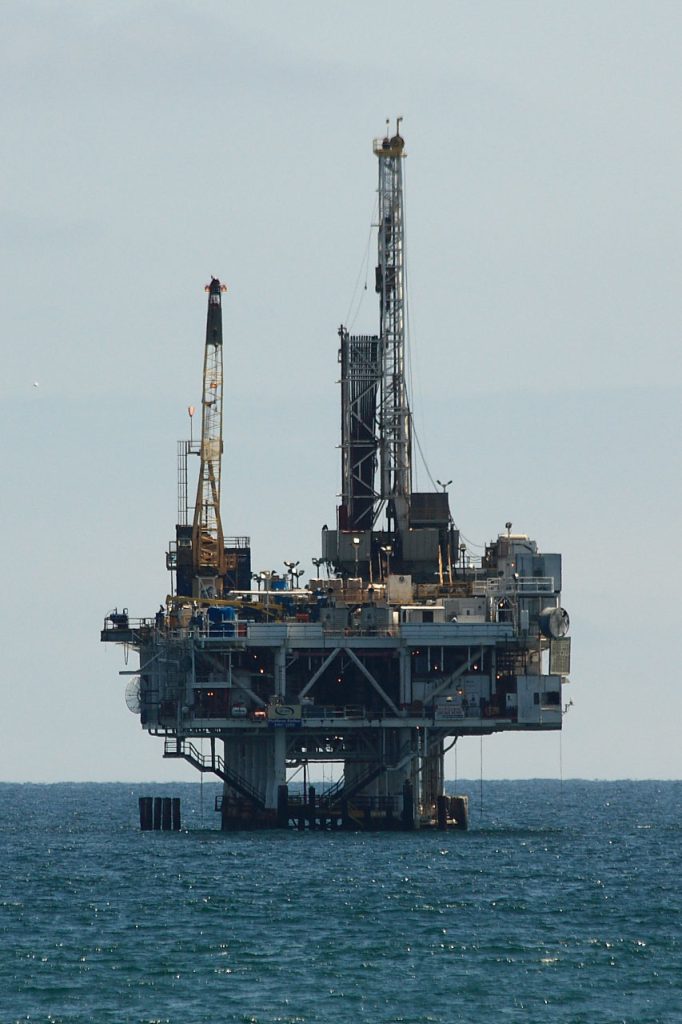
Offshore oil rig (Source: Public Domain Pictures]