
Nuclear power is cheap and clean. It’s the best way to stop global warming.
Fact:
Nuclear power is a possible solution to global warming, and may be viable in countries that do not have plentiful sources of renewable energy, but it is definitely not viable in Australia.
The fact is that wind and solar are significantly cheaper than nuclear, so no companies are likely to build reactors unless heavily subsidised by the government. As of 2026, the price of nuclear power was between 14 and 32 cents a kilowatt hour. By contrast, the price of solar was between 2 and 9 cents a kilowatt hour, and onshore wind between 4 and 13 cents. Largely for this reason, just 4.4 GW of nuclear power was installed worldwide in 2025, compared with 814 GW of wind and solar! At the same time, 2.8 GW of nuclear power was decommissioned, meaning the total planned addition to the world’s nuclear capacity for 2025 was 1.6 GW.
Cost blowouts are another problem that plagues the nuclear industry. The sole reactor project commenced in Britain this century, Hinkley Point C, has seen its cost blow out from £9 billion to £34 billion. Indeed, the company building it, Électricité de France, had to be bailed out and then nationalised by the French government in 2023, it was losing so much money. And France’s own reactors are so old and unreliable that they have had to subsidised to the tune of US$26 billion a year – all at the taxpayer’s expense.
Even in the US, home to a quarter of all the world’s reactors, only two nuclear projects have been commenced this century, with both losing vast sums of money. The nuclear plant in Georgia – possibly the last commercial plant ever to be built in the United States – saw its cost blow out from US$2.8 billion to US$17.5 billion by its completion date in 2025. The twin V.C. Summer reactors being built in South Carolina fared even worse. Their cost blew out by US$13.5 billion over four years, causing the entire project to be scrapped.
Yet another problem relating to nuclear power is that it can take up to 20 years to build a nuclear reactor in a western industrialised nation. The Vogtle plant in Georgia was first announced in 2008, and completed in 2024. Hinkley Point C in the UK was first announced in 2007, but is not expected to be completed until 2031! Those are construction times of 16 and 24 years respectively – and in nations with decades of experience building such plants.
Then there is the matter of politics. Although modern reactors are far safer than their predecessors, the experience of Three Mile Island, Chernobyl and Fukushima has soured the public on nuclear technology. In democratic nations it is next to impossible to find a community willing to host a nuclear reactor, let alone one that will store nuclear waste. As such, it is futile to push nuclear power as a solution.
A final problem relates to nuclear waste, which must be stored securely for many thousands of years before its radioactivity drops to safe levels. The cost of doing so, and the impact on the environment at the storage site, are often not fully taken into account when calculating the cost of nuclear power.
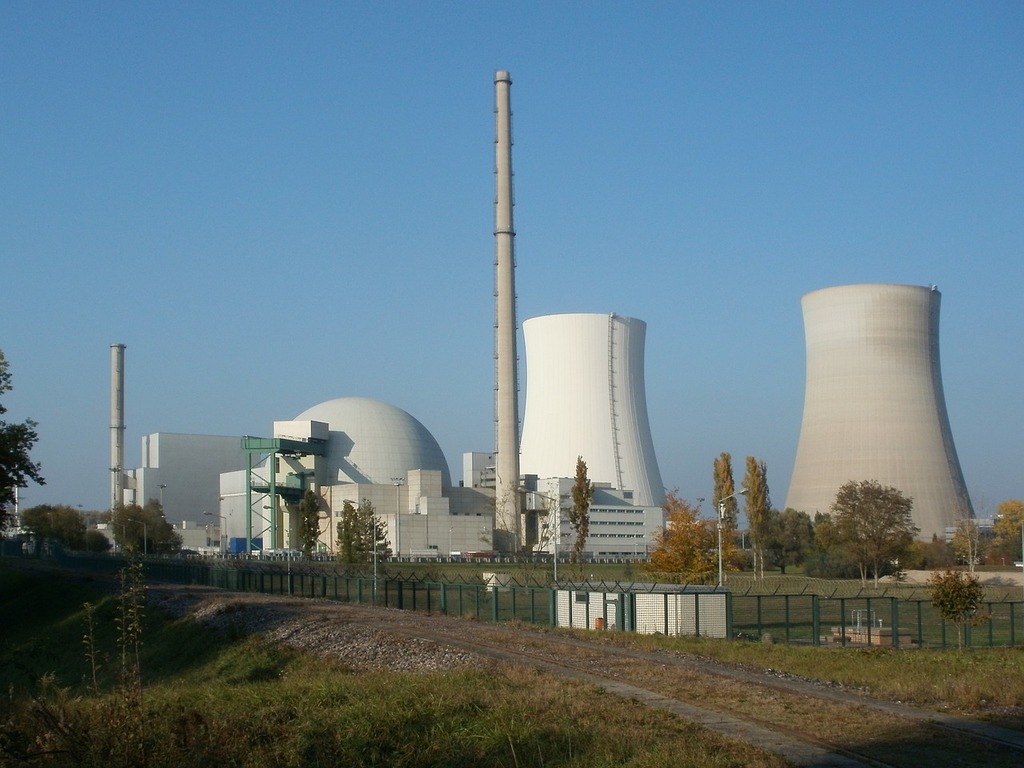
Nuclear power plant [Source: PICRYL]