
Small modular reactors are the solution to the climate crisis, as they are cheap, clean and safe.
Fact:
Small modular reactors (SMRs) are mini-nuclear power plants, similar to the units used in American aircraft carriers and nuclear submarines. They have been touted as viable sources of zero-emissions energy but actually suffer from the same problems as their full-scale counterparts. At the moment, there is only one SMR operating in the world – Russia’s 70 megawatt floating nuclear power plant, which is used to provide electricity to isolated settlements on the Arctic coast. This reactor cost 37 billion roubles (A$688 million) to build and produces power at five times the cost of renewable energy in Australia. China’s demonstration 210 MW high-temperature gas-cooled reactor (HTGR) is proving slightly less expensive to run but is nowhere near competitive with renewable energy sources or with large-scale nuclear plants. The only way the costs of SMRs could be reduced to a competitive level would be to mass produce them, but there is no sign of this happening.
Prior to the 2025 election, the Coalition mooted the idea of replacing Australia’s ageing coal fired power stations with SMRs. To do so would require 71 such reactors, but these could not be built until most of our coal-fired plants had already closed down – leaving us with significant power shortages. In addition, the Department of Energy estimates that the cost of building 71 SMRs would be $387 billion, or $18,167 a kilowatt, compared with $1,058 for large-scale solar projects and $1,989 for onshore wind. Even if the ultimate cost of SMRs proves to be much less, they will still be uncompetitive, short of massive taxpayer subsidies.
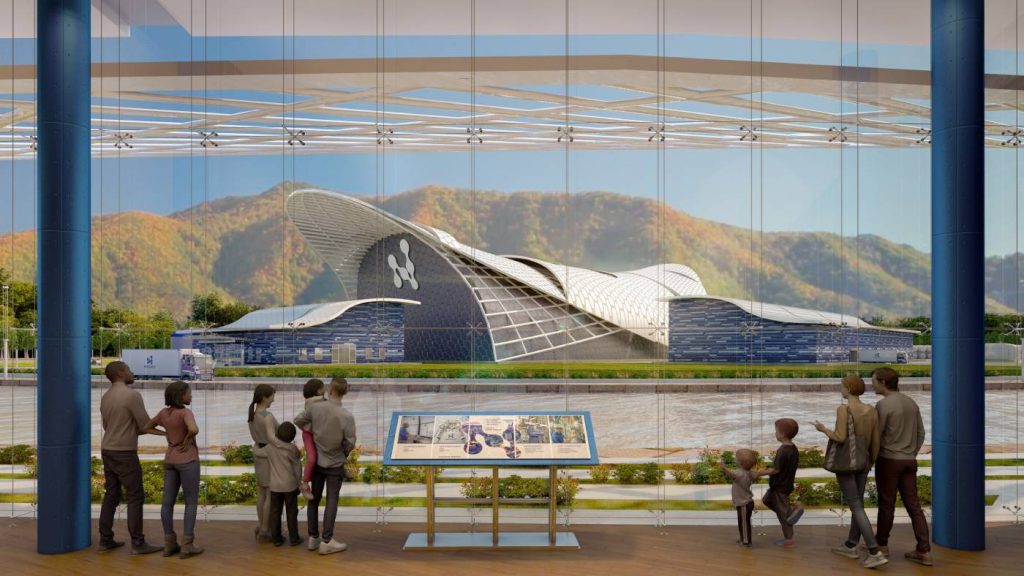
Artist’s impression of a small modular reactor [Source: NuScale Power]