
It’s not hard to cut emissions by up to 80 percent, but the other 20 percent won’t be cheap.
Aluminium is one of the ‘hard basket’ industries, when it comes to decarbonisation. Like steel, it’s a construction material we can’t do without, due to its light weight and its resistance to rust. But it’s also responsible for 2 percent of global emissions. Indeed, it is so carbon-intensive that for every tonne we produce, 16 tonnes of CO2 are emitted. This makes it eight times more polluting per tonne than steel.
What makes aluminium so polluting is that CO2 is emitted in all three stages of its production: the mining of bauxite; the processing of that bauxite into alumina (aluminium oxide); and the reduction of the alumina into aluminium, via electrolysis.
The first stage is the easiest to decarbonise. All that is required is for the equipment used in the mining process be electrified. This is not just possible, it’s already being done by one of Australia’s biggest minining companies – Fortescue – which is replacing all its diesel-powered excavators and trucks with electric equivalents. The power for these will be sourced entirely from renewables. Fortescue, of course, extracts iron ore, not bauxite, but the equipment used for both is the same.
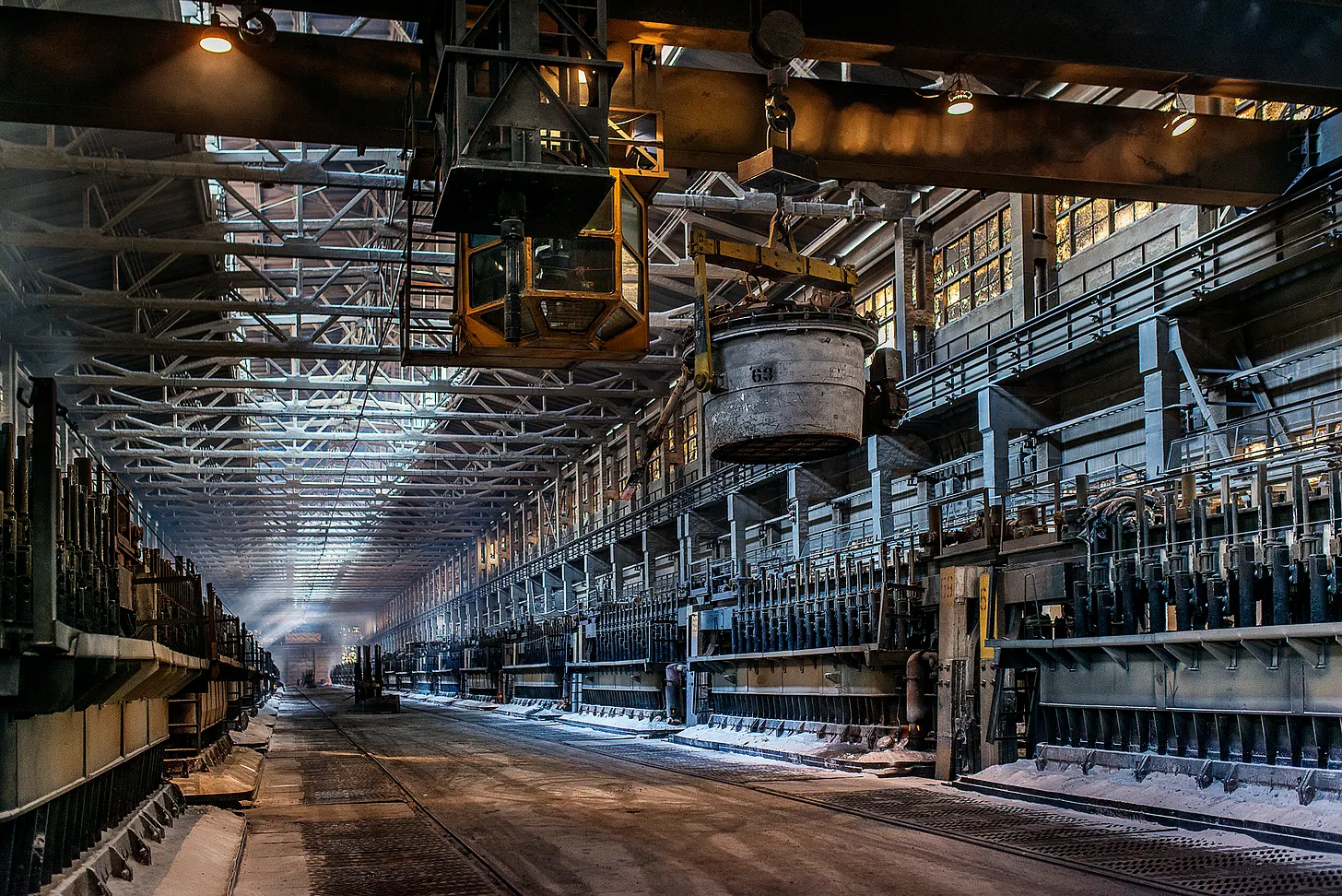
The second and third stages in the production of aluminium are harder to clean up, as they require extreme levels of heat. During the second stage, fossil fuels are usually burned onsite. During the third stage (smelting), CO2 is emitted via the use of carbon anodes and via the generation of electricity to power the electrolysing process.
The good news is that over 60 percent of the CO2 emitted in the manufacture of aluminium occurs when electricity is generated. By using renewable energy, almost all those emissions can be eliminated. Further reductions can be achieved by replacing the carbon anodes used in smelting with inert anodes that emit oxygen rather than CO2, and by using a process known as ‘mechanical vapor recompression’.
If all these techniques are utilised, emissions can be reduced from 16 tonnes of CO2 per tonne of aluminium to just 3 tonnes. The remainder cannot be eliminated using technology that is available today, so will have to be sequestered using carbon capture and storage (CCS).
The problem is, producing ‘green’ aluminium is an expensive process, and is not viable commercially at the moment. It would need to be subsidised by government until costs fall or new technologies become available. That said, emissions can be significantly reduced without breaking the bank, so companies should be encouraged or pressured into doing so.
Another option is to recycle more aluminium. Recycling doesn’t require anything like the amount of energy that producing new product does. So, collecting soft drink cans may be more important than anyone realised.
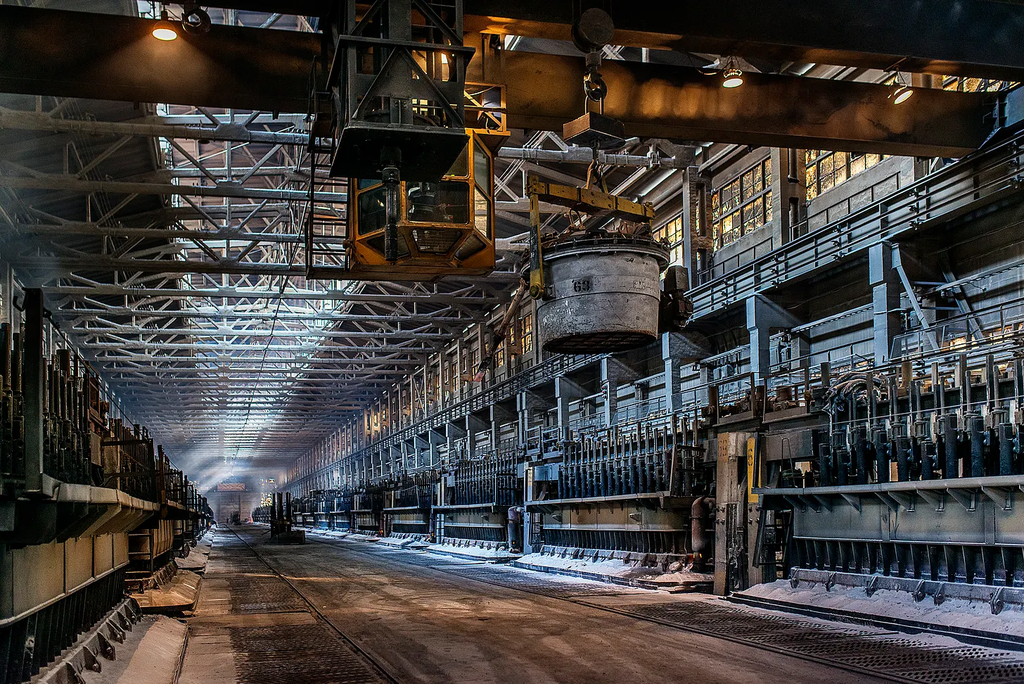
An old-style aluminium smelter.