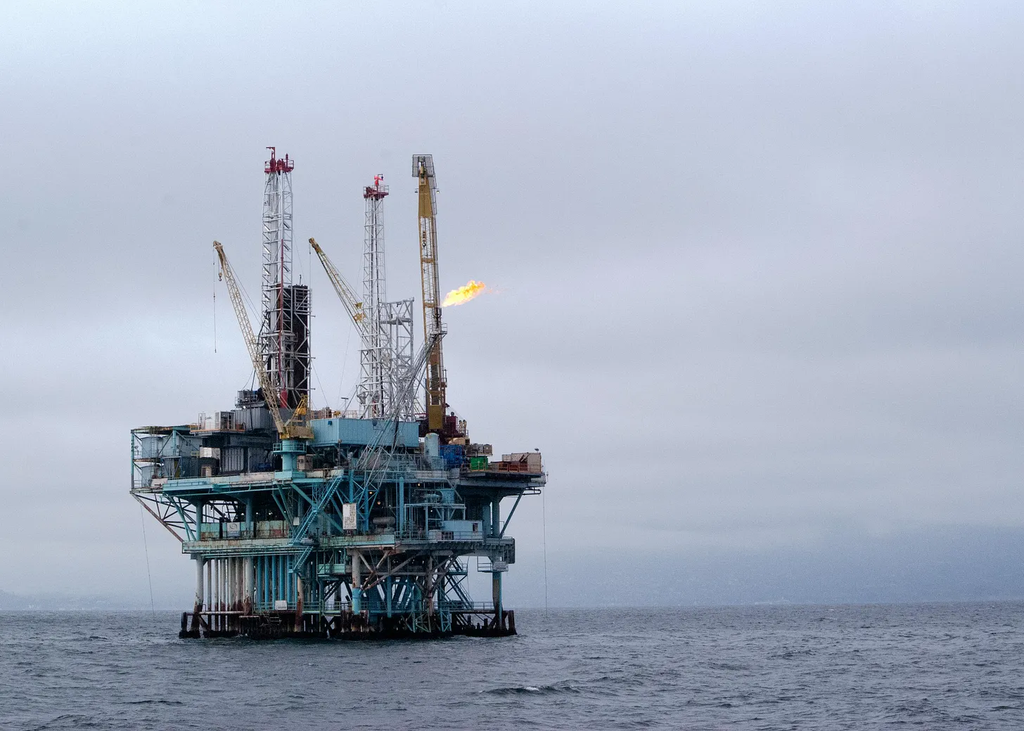
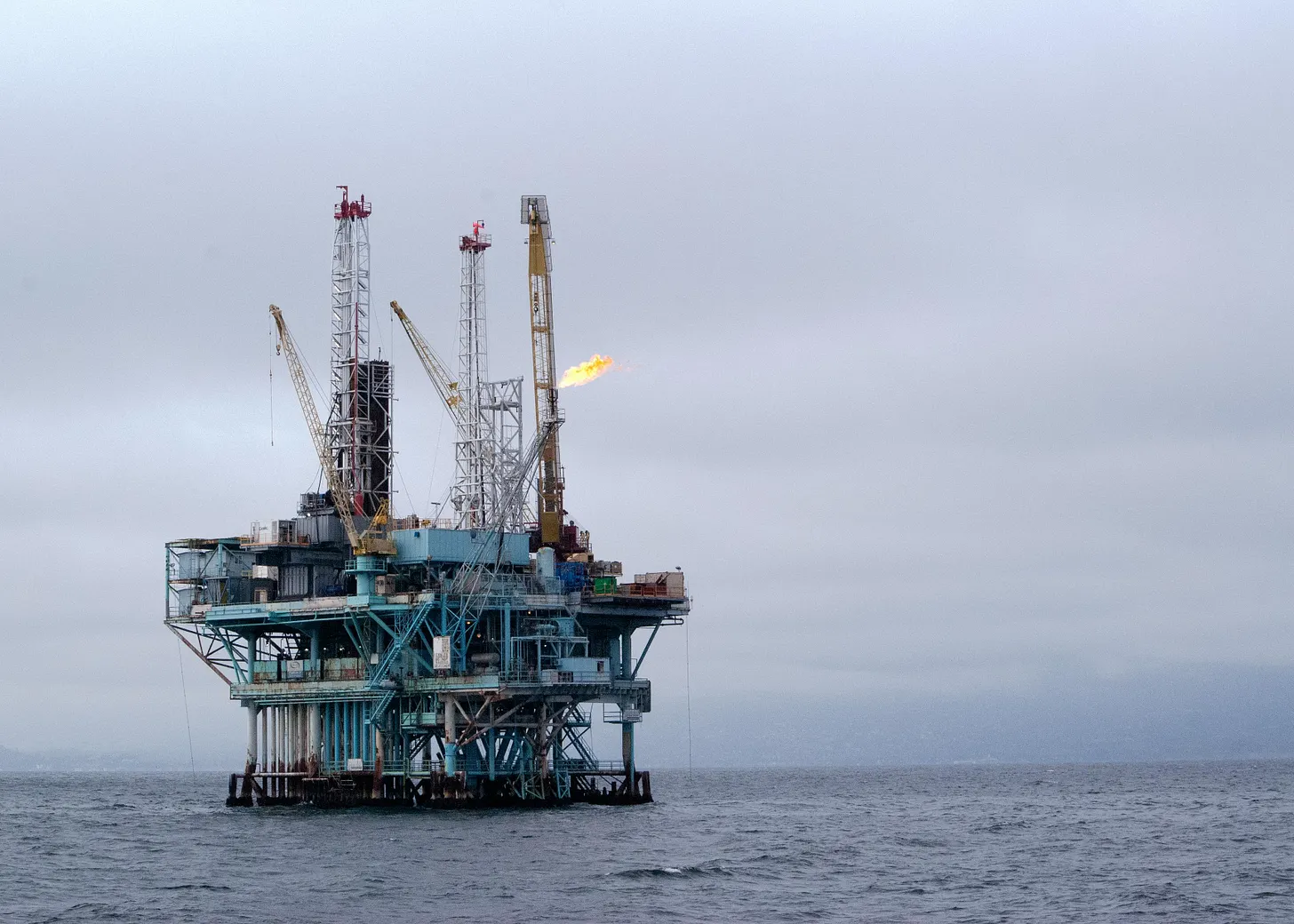
Those who thinks we can drill our way to energy independence are having themselves on.
The current energy crisis unleashed by the American and Israeli attack on Iran has also unleased a rigorous debate in Australia over who is to blame for our dependence on imported oil.
On the one side are those who see the issue from the point of view of supply. For them, we should have explored for more oil to replace what we no longer pump from Bass Strait. (Domestic oil production has declined by 90 percent since 2000.) They also argue that we should also have retained more of our oil refineries – six of the eight having been closed down since 2012. Two of those refineries closed under Labor and four under the Coalition, so both sides of politics are responsibile for this.
On the other side of the debate are those who see the problem as one of demand. They argue that we should have spent the last few years encouraging people to buy EVs, in order to reduce our consumption of petrol and diesel.
Of course, both sides agree that we should have stockpiled more fuel in Australia than the five weeks’ worth we currently have. (Australia purchased 1.7 million barrels of crude oil in 2020, to satisfy IEA requirements, and stored it in the United States. However, it sold it in 2022, as it was only enough to keep us going for about four days, and there was no practical way to transport it from Texas, where it was being stored.)
So, is there any validity to the arguments being put by those who want to keep us dependent on petrol and diesel?
In a word, no.
Australia has known reserves of about 1.8 billion barrels of oil – enough to keep us going for 4 years without imports (assuming, of course, that we could refine it, which we can’t). There are also believed to be several hundred million barrels of oil under the Gulf of Carpentaria, although more exporation would be needed before it could be tapped. And even if it were, it is nowhere near enough to make a difference to our domestic supplies.
Another option is shale oil, of which we are estimated to have between 13 and 18 billion barrels. This is a sizeable amount, but is tapping it viable?
Again, the answer is no.
In the first place, it would take between 5 and 10 years to set up a shale oil industry, and double that time to scale it up to the level needed. This would be no quick fix.
Secondly, the break-even price of shale oil is double that of conventional oil, even in Canada and the United States, where the industry is well established. In Australia, the price would be higher again, rendering investment uneconomic. Of course, the government could heavily subsidise the new industry, but would be far better off subsidising the rollout of EVs.
A third option is to drill in the Great Australian Bight, where there is estimated to be up to 5 billion barrels of oil – about the same amount as in the Bass Strait before drilling began. This would be enough to supply all of Australia’s fuel needs for a dozen years – a not insubstantial amount.
Unfortunately, those oilfields are about 400 kilometres offshore and are located at depths of between 1,000 and 2,200 metres. Bass Strait’s oilfields, by contrast, are much closer to shore and at depths of between 50 and 400 metres. As such, they have been relatively cheap and easy to exploit. The same cannot not be said for the oil in the Great Australian Bight. The three companies that had exploration rights to this oil were of a similar view, and have all abandoned plans to drill. BP pulled out in 2016, Chevron in 2017 and Equinor in 2020.
Of course, Matt Canavan and his supporters will argue that with the price of oil now much higher than it was pre-COVID, the value of oil in the Bight will be higher too. That may be true at this moment, but companies will only invest if they think the price will stay high, and there is no guarantee whatever of that.
And even if the price were to stay high, that is not a reason to drill the Great Australian Bight. Before COVID, there was no alternative to cars and trucks that ran on fuels derived from oil. Now we have EVs, which are slowly displacing internal combustion engine (ICE) vehicles on the world’s roads. In Norway, 96 percent of cars sold are fully electric. In Nepal, the figure is 76 percent. In China, it’s 58 percent. Here in Australia, the figure is 13 percent, but it’s expected to climb rapidly as a result of the current petrol crisis. In other words, the higher the price of oil, the faster the world’s motorists will abandon ICE vehicles, shrinking the demand for oil.
So even if there were not urgent environmental reasons to keep the Great Australian Bight’s oil deep below the ocean floor, there are strong economic ones to do so.
Finally, there is the question of whether we should build new oil refineries. One argument for doins so is that oil is safer and easier to store than petrol and diesel. But the cost of building new refinieries would be prohibitive, particularly since we don’t have any domestic oil to refine in them. All of it would have to be imported, so our energy security would not be significantly improved.
Of course, all this ignores the most important factor in the mix: we cannot reach net zero while still using fossil fuels to run our vehicle fleet. If we want to get our emissions down, we have no alternative but to hasten the rollout of EVs. Hopefully, the current energy crisis will give people and governments the push they need to make the switch.
Last week, we looked at the prospects of Australia exploiting its shale oil reserves, as a way of avoiding or mitigating future energy crises. This week, we look at whether we could drill in the Great Australian Bight. This is certainly what National Party leader Matt Canavan is calling for, with the Murdoch Press acting as his willing claque. The Daily Telegraph is even claiming that 69 percent of Australians support such a move.
So, do Canavan’s claims stack up?
First, let’s establish just how much oil there actually is in the Great Australian Bight. Actually, there’s quite a lot – possibly as much as as 5 billion barrels, which is the same amount the Bass Strait oilfields had before they were exploited. This would be enough to supply all of Australia’s fuel needs for a dozen years – a not insubstantial amount.
Unfortunately, those oilfields are in an extremely remote area – about 400 kilometres offshore. They are also located at depths of between 1,000 and 2,200 metres. Bass Strait’s oilfields, by contrast, are much closer to shore and at depths of between 50 and 400 metres. As such, they’ve been cheap and easy to exploit. The same cannot not be said for oil in the Great Australian Bight. The three companies that had exploration rights to this oil were of a similar view, and abandoned plans to drill. BP pulled out in 2016, Chevron in 2017 and Equinor in 2020.
Of course, Matt Canavan and his supporters will argue that with the price of oil now much higher than it was pre-COVID, the value of oil in the Bight will be higher too. That may be true at this moment, but companies will only invest if they think the price will stay high, and there is no guarantee of that.
And even if the price of oil were to stay high, that is not a reason to drill the Great Australian Bight. Before COVID, there was no alternative to cars and trucks that ran on fuels derived from oil. Now we have EVs, which are slowly displacing internal combustion engine (ICE) vehicles on the world’s roads. In Norway, 96 percent of cars sold are fully electric. In Nepal, the figure is 76 percent. In China, it’s 58 percent. Here in Australia, the figure is 13 percent, but it’s expected to climb rapidly as a result of the current petrol crisis. In other words, the higher the price of oil, the faster the world’s motorists will abandon ICE vehicles, shrinking the demand for oil.
So even if there were not urgent environmental reasons to keep the Great Australian Bight’s oil deep below the ocean floor, there are strong economic reasons to do so. As such, we must resist the populist arguments being pushed by climate sceptics that drilling in the Bight will solve our energy woes. Only a rapid electrification of our vehicle fleet will truly do that.