
One of the most effective ways of changing people’s minds about climate change is to have a personal conversation with them, especially if you know them well. People take the opinions of family, friends and work colleagues seriously, and will listen to what you have to say – as long as you’re not being pushy.
There are seven things to keep in mind when having a conversation with a climate sceptic.
Firstly, try to understand why they hold the views they do. Are they sceptical for psychological reasons, economic reasons, social reasons, religious reasons or ideological ones? Once you understand where they are coming from, you can devise a strategy to win them over. For example, if they believe that all climate activists are leftists, then reassure them that this is not the case. There are many people you can name who are not left-wing but who still support climate action. In Australia, these include Matt Kean, John Hewson, Malcoln Turnbull, Larry Anthony, Kerry Chikarovski, Nick Greiner, Robert Hill and Phillip Ruddock. If your interlocutor thinks climate action is going to bankrupt the county, then explain that it is actually inaction that threatens our prosperity. If that person does not want to face reality because it is too frightening, then reassure them that all is not lost. Things are far better than they were ten years ago, as we now have all the technology we need to solve the problem and are well advanced in adopting it. We are winning the war, but just not quickly enough.
Secondly, know some basic facts about climate change and renewable energy. You don’t need to know everything, or even a lot, but you do need to know three key things: that the science of global warming is settled; that renewable energy is cheaper than fossil fuels in most parts of the world; and that EVs have now reached price parity with internal combustion engine vehicles.
Thirdly, don’t be afraid to admit that you don’t know everything. But assure your interlocutor that you’ll find the answer and send it to them promptly. It doesn’t matter if you don’t have this information yourself or don’t know where to find it. Just contact someone who does have the facts, and ask them to send you what you need. Or check out Climate Myths and How to Respond to Them, which debunks over 120 misconceptions about climate change, renewable energy and EVs. If the person you’re speaking with makes an assertion that runs counter to what you know, ask for the source of their information. Give them your email address and ask for theirs, so you can send them some real information. It’s highly unlikely they’ll send you anything, but by requesting their sources you are putting the onus on them to back up what they’re saying. They may not admit to you that they don’t have an answer to you, but they will have to admit it to themselves.
Fourthly, never be aggressive or patronising, as this may just entrench the views you’re trying to counter. Always be friendly and polite. If the other person gets aggressive, then it means your arguments are probably cutting through.
Fifthly, always be positive. Excessive negativity can discourage action as much as encourage it. People have to believe that it’s not too late to save the planet.
Sixthly, try to find areas of agreement with the person you’re speaking with. That will make them better disposed to you, and therefore more likely to listen to what you’re saying about climate change.
Finally, don’t waste your time on hardcore climate deniers, as you are unlikely to change their minds. The only exception to this rule is if they are holding court at an event and having an influence on those around them. Then you should at least challenge their views, to demonstrate that climate scepticism is not the norm.
In conclusion, talking about climate change with people you know is the best way to change their views. If they like you and respect you, they’ll have respect for your opinions too.
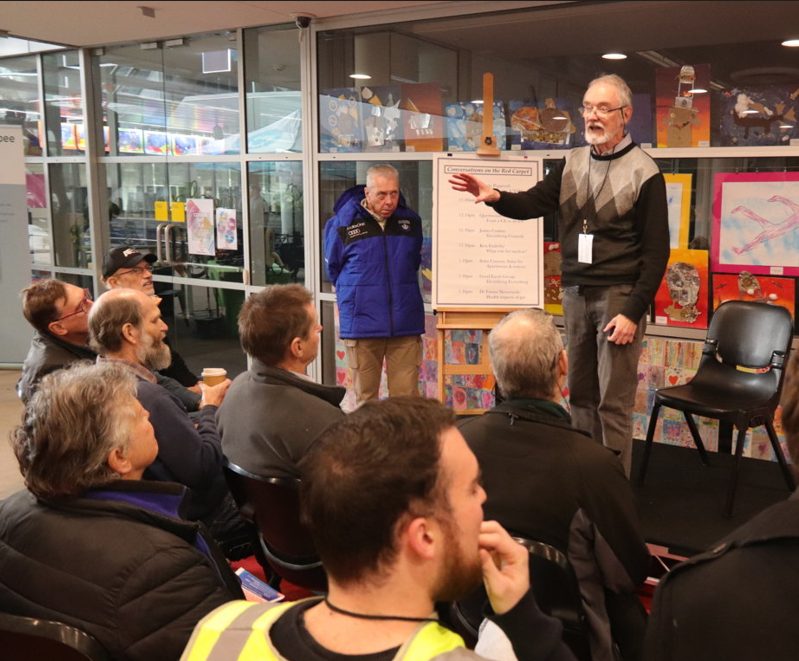
The author, addressing a group about climate change. [Source: Ken Enderby]