
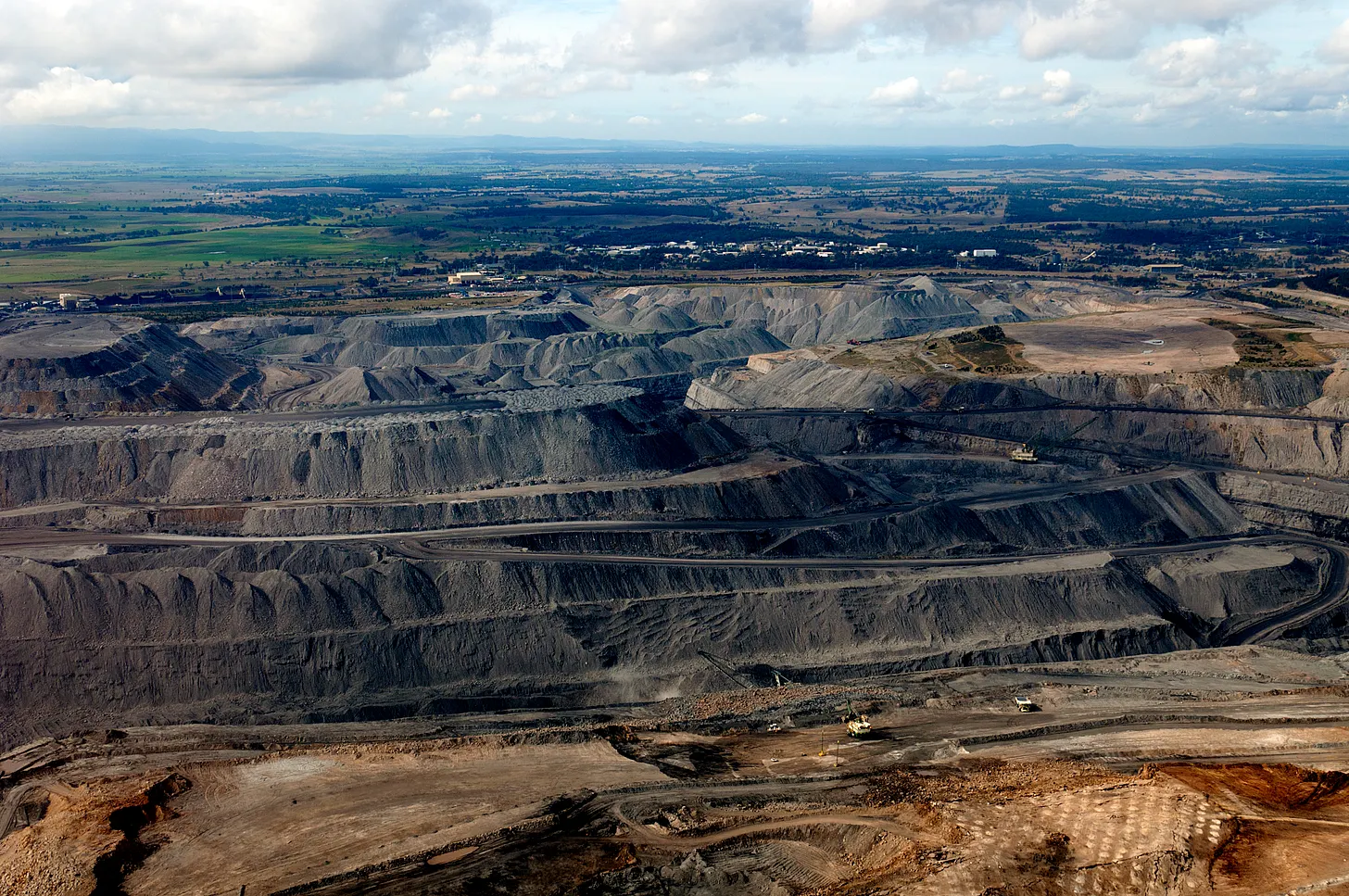
Our fossil fuel exports face a grim future, and the sooner we wake up to this the better.
When we look at the prospects for Australia’s coal and gas exports, it’s hard not to conclude that the outlook is grim – at least from the perspective of the exporters. According to the Commonwealth Treasury, income derived from the export of coal and gas is likely to fall from A$198 billion this year to A$106 billion in 2030 and A$46 billion in 2050. The decline may actually be greater and faster than this.
While this is good news for the global environment, it’s bad news for the Australian economy, as fossil fuel exports account for 7 percent of our GDP. This is not a small amount. It is actually greater than the proportion represented by agriculture (2.5 percent) and manufacturing (5.9 percent), and similar to that represented by construction (7.5 percent) and finance (7.5 percent). A collapse of any of these industries would be disastrous for the country, resulting in unemployment, a fall in GDP and the loss of government revenue. If the collapse occurred in the export sector, it would also precipitate an exchange rate crisis, as happened in the mid-80s when our terms of trade nosedived. This in turn would cause inflation to spike and interest rates to rise and trigger a deep recession – something we’ve managed to avoid for over 30 years. No government could survive such a pummelling.
It’s this type of argument that our opponents make to justify the approval of new fossil fuel projects, and thus far the climate movement has struggled to counter such reasoning. But the Treasury’s modelling has changed all of that. We now know that coal and gas exports are going to decline anyway, irrespective of whether new projects are approved. Most such projects will wind up as stranded assets – ones for which there is no longer a market. The fossil fuel companies are in denial about this, because they fear the price of their shares will collapse and the banks will stop lending them money. This is why they donated so much to Donald Trump’s election campaign. He is seen as a bastion against their demise.
The good news is that that demise does not have to be bad for the Australian economy. Along with its estimates for fossil fuel exports, the Treasury also released ones for the exports that are going to boom over the next two decades, and these are all related to the energy transition. The ones that will sustain us in the future include ammonia, iron, steel, bauxite, alumina, aluminium, copper, lithium, nickel, cobalt and a host of critical minerals and rare earths. Revenue from these is expected to rise from A$46 billion in 2025 to A$120 billion in 2035 and A$270 billion in 2050. In fact, they are set to bring in more export income than fossil fuels do today.
But the transition will have to be managed carefully. It will involve federal and state governments putting a stop to scarce resources being invested in what will soon be dying industries. They will also need to provide incentives for companies to invest in the industries of the future – the ones that will fuel the global energy transition. The government’s recent deal with the US over critical minerals and rare earths is an example of exactly what we should be doing – creating a comparative advantage for ourselves in the new economy. As much of this as possible should be in processing, rather than just in mining. The government seems to understand this.
So, even if Ross Garnaut’s vision of Australia rebuilding its manufacturing sector on the back of clean energy doesn’t come true, we’ll certainly be a major supplier for the global energy transition. That will be enough to save us economically. But we’ll have to get moving quickly. The sooner we act, the faster we’ll secure our future.
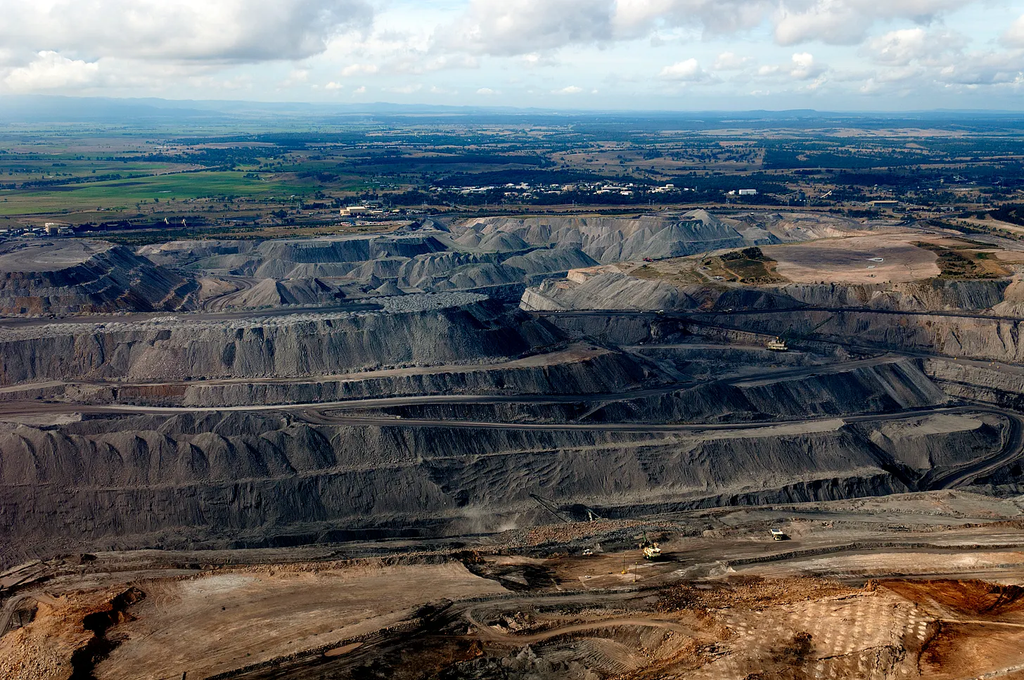
An open cut coal mine in Australia.