
On January 8th, 2024, Arctic sea ice reached its highest level in 21 years. How can global warming be real if this is so?
Fact:
It’s true that Arctic sea ice did briefly reach a 21 year high on January 8th 2024, but unfortunately this was an anomaly, not a trend. Over the past 45 years sea ice cover has actually been in steady decline. In February 2024, it covered 14.61 million square kilometres of the Arctic – 4.6 percent less than the 1981-2010 average of 15.30 million square kilometres.
Of course, the real problem is not the level of sea ice in winter, but the level in summer. Studies suggest that even if greenhouse gas emissions are sharply reduced, the Arctic will be ice-free during September in just a few decades’ time. If they are not reduced, this could happen as early as the 2030s. In either case, it will be disastrous for the animals that make the region their home.
So no, Arctic ice cover is not on the rise. Claims to the contrary are just cherry picking.
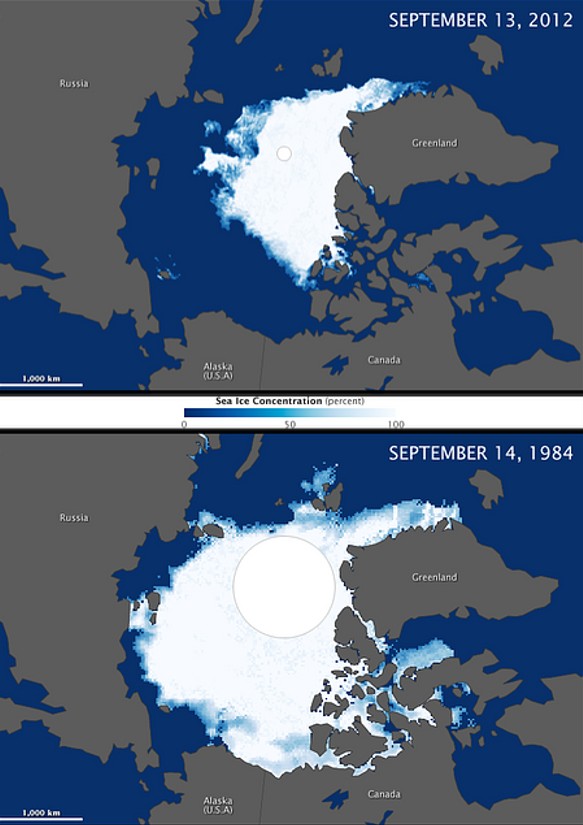
Shrinking Arctic sea ice, 1984-2012 [Source: PICRYL]