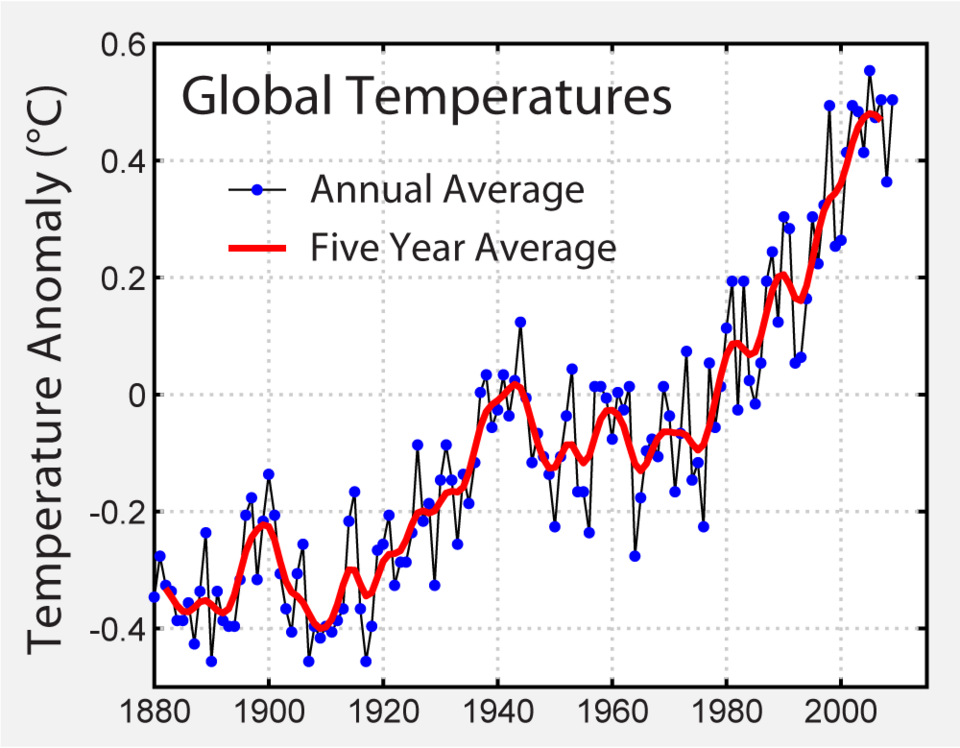
Temperature data is inaccurate because we don’t have good enough technology to measure the Earth’s surface, the oceans, the stratosphere or the troposphere. So, these cannot be relied on as indicators of global warming.
Fact:
First, let’s deal with the slight fall in global temperatures that occurred in the 1950s and 60s. This was caused by increased particulate matter (sulfate aerosols) in the atmosphere, due to unregulated industrialisation. This particulate matter reflected some of the sun’s rays away from the Earth, causing a small amount of cooling. When, for health reasons, nations introduced laws in the 1970s mandating a reduction in industrial pollution, the quantity of particulate matter decreased significantly, and global warming resumed as predicted. [It should be noted that increased particulate matter resulting from greater volcanic activity after 1257 AD is believed to have been the main factor triggering the so-called ‘Little Ice Age’ (1450-1850 AD), which caused a noticeable drop in temperatures in the Northern Hemisphere. The drop in global temperatures, however, was nowhere near as significant – somewhere between 0.2°C and 0.6°C from the peak of the Medieval Warm Period (900-1150 AD).]
As for the temperature ‘pause’ that occurred between 1998 and 2005, this was really only illusory, as 1998 was an exceptionally hot year. Has it not been so hot, the temperature record would have been broken several times during that seven-year period.
And once the 1998 record was broken, new records have been set regularly over the next two decades – first in 2010, then every couple of years, and now almost every year. By way of comparison, global temperatures rose by an average of 0.07°C each decade after 1880. The most recent decade (2010-19), however, saw an increase of 0.39°C – five and a half times the historical average. The warming trend is clear, and very worrying.