
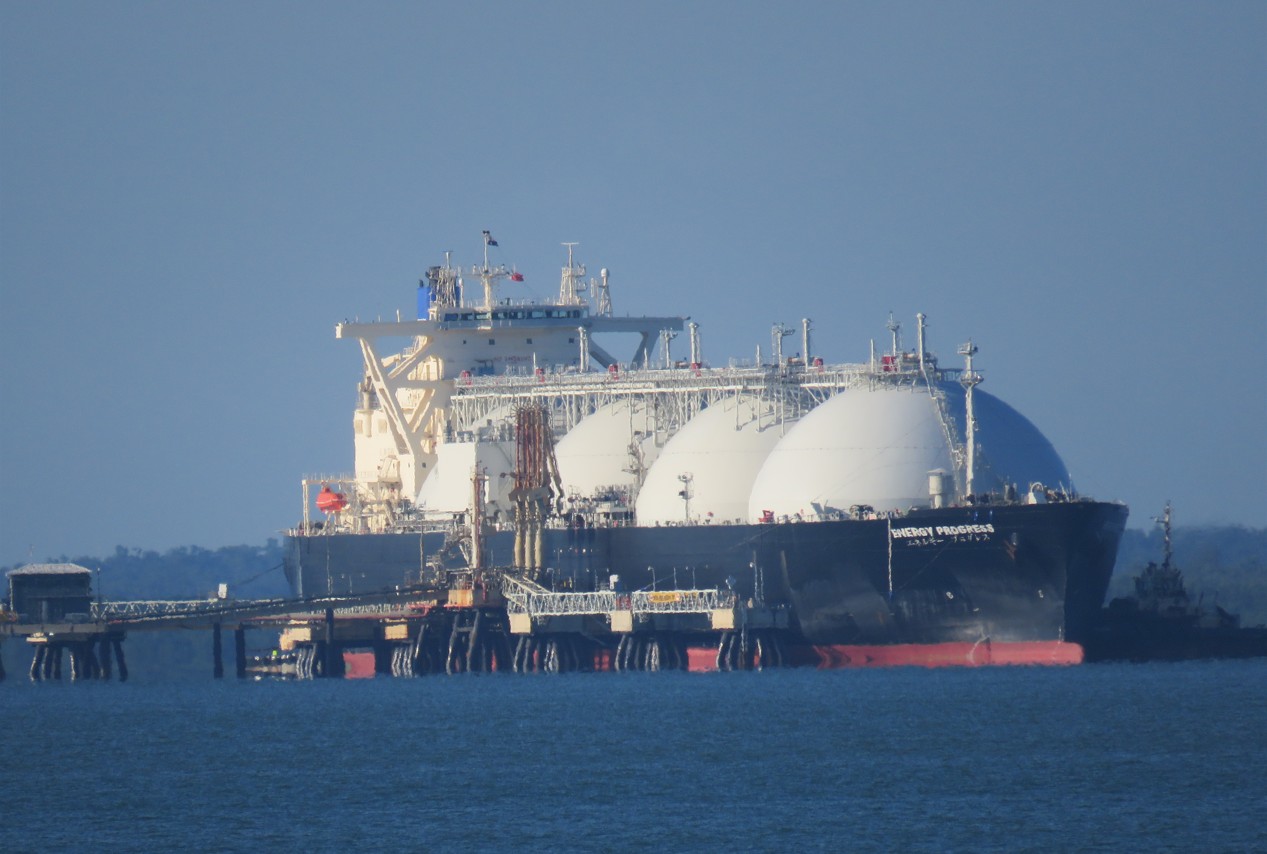
Where do our exports of LNG go, how are they used and what are their prospects in coming decades?
Where do our exports of LNG go, how are they used and what are their prospects in coming decades?
Australia is one of the top exporters of fossil fuels in the world. Coal makes up 16 percent of the nation’s total exports, Liquid Natural Gas (LNG) 11 percent and petroleum another 2 percent, bringing the total to 29 percent. This is a significant source of income and foreign exchange – A$198 billion in 2025 – and represents 7 percent of GDP. $103 billion of this comes from the export of LNG, $52 billion from the export of thermal coal, and $43 billion from the export of metallurgical coal.
In this article, we will look at our exports of LNG – where they go, how they are used and what their prospects are for the future.
Australia is among the top three exporters of LNG in the world, with around 80 million tonnes being shipped out each year. 33 percent of this goes to China, 32 percent to Japan, 15 percent to South Korea and 10 percent to Taiwan. We will examine each of these nations in turn.
China gets 8 percent of its energy from gas. 61 percent of that gas is sourced domestically. Of the rest, 42 percent comes via pipelines from Russia and Central Asia, and 58 percent is shipped in as LNG. Australia supplies 34 percent of China’s LNG, which represents 8 percent of the nation’s total gas supply. Gas will likely be the last fossil fuel that disappears in China, given that it is less polluting than coal (in terms of particulate matter) and that China sources the majority of it locally. That said, LNG imports fell by 22 percent in the first half of 2025, compared with the same period the previous year. This does not bode well for Australia’s gas exporters.
Japan is much more reliant on gas than China. It gets 21 percent of its energy from this source. This is because 33 percent of its electricity is produced using gas. (China gets just 3 percent of its electricity this way.) 42 percent of Japan’s gas comes from Australia, but because the nation is using less gas each year, an increasing proportion of what it buys is on-sold to other nations. The amount of Australian gas now on-sold annually equals the total amount used in NSW, Victoria and Queensland! And the Japanese companies selling that gas are making $1 billion a year in profit!
South Korea gets 28 percent of its energy from gas. All of it is imported, making the country the third largest importer of LNG in the world. 27 percent of this comes from Australia. Unfortunately, South Korea generates just 7 percent of its electricity from renewables, with 32 percent coming from nuclear, 27 percent from coal and another 27 percent from gas. The current plan is to increase the proportion of clean energy in its grid from 39 percent to 54 percent by 2030, thereby reducing the nation’s reliance on imports. Undoubtedly, this will have an impact on Australia’s exports.
Finally, we have Taiwan, which imports almost 98 percent of its energy. 40 percent of it is in the form of gas, and 37 percent of that gas comes from Australia. Taiwan’s import dependence has been exacerbated by its decision to close down its nuclear power plants, following the Fukushima disaster in Japan. These were mostly replaced with fossil fuels, which now generate 88 percent of the nation’s electricity. A whopping 42 percent is generated using gas, meaning Australia supplies 15 percent of all of Taiwan’s energy. Like South Korea, the nation uses very little wind and solar, and it has no serious plan to rectify this. It is one of the few nations that will continue importing Australian gas well into the future – if we let it!
So, what can we conclude from all of this?
Firstly, although gas is difficult to eliminate from the global energy system, the prospects of reducing its use in Asia are strong. This is because it is a key part of electricity generation in Taiwan (42 percent), Japan (33 percent) and South Korea (27 percent), so can be replaced by renewable energy or nuclear power relatively easily. There is now clear evidence that Japan and South Kora age going down this path, although nowhere near as quickly as needed, from a climate perspective.
Secondly, because China has large supplies of domestic gas, the energy transition it is pursuing will have its initial impact on its gas imports, 8 percent of which come from Australia. Those imports have fallen by around 20 percent in the 2024-25 fiscal year, partly because China’s thirst for gas is declining and partly because LNG imports are being replaced by domestic production and imports via pipeline from Russia.
Thirdly, global supply of LNG is set to increase by 40 percent by 2028, without an attendant increase in demand. This will put downward pressure on prices, rendering LNG less profitable than in the past. This will hit high-cost producers like Australia particularly hard.
Finally, Australia’s LNG industry is set to shrink markedly over the next 25 years. According to the Commonwealth Treasury, the amount of gas and LNG produced in Australia will fall by about 25 percent by 2035, and by 67 percent by 2050. It’s doubtful we’ll be exporting any gas at all by 2070, when Woodside’s extension of the North West Shelf project finally expires. We probably won’t be exporting much by 2050, and we certainly shouldn’t be exporting any. One way or another, the gas bubble is going to burst, and we need to make sure we do not get damaged when it does.
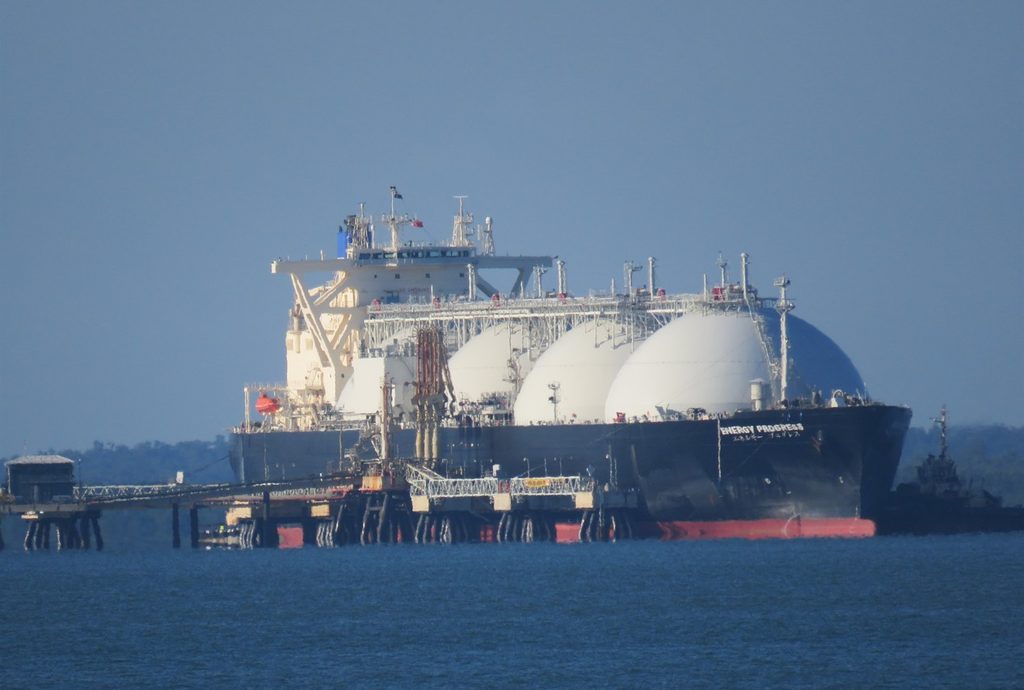
An LNG tanker at Santos’ Wickham Point facility in Darwin.