
Yes, but it will be difficult.
Shipping is yet another sector that is difficult to decarbonise. It is responsible for 3 percent of global emissions – slightly more than aviation. Its importance to the global economy is inestimable, so we simply have to find a way to power ships with something other than fossil fuels.
Unfortunately, the simplest way to do this – electrification – won’t work for long-distance voyages. The problem is that batteries have very low energy density, meaning they have to be a lot heavier than a full tank of fuel in order to deliver the same amount of energy. In the case of an electric vehicle, the battery weighs 12 times more than a full fuel tank. To run an ocean-going vessel on electricity, the battery would need to be heavier than the maximum weight the ship could carry. Hence, battery-power is only usable for vessels that ply rivers, harbours and coastal waters, where they can be recharged regularly.
One option being pursued for ocean-going vessels is to increase their fuel efficiency. This can be done by ‘slow steaming’ (reducing engine speed) and by adding subsurface bulbs to ships’ bows, thereby reducing drag. These initiatives have reduced the carbon intensity of ships by 30 percent since 2008.
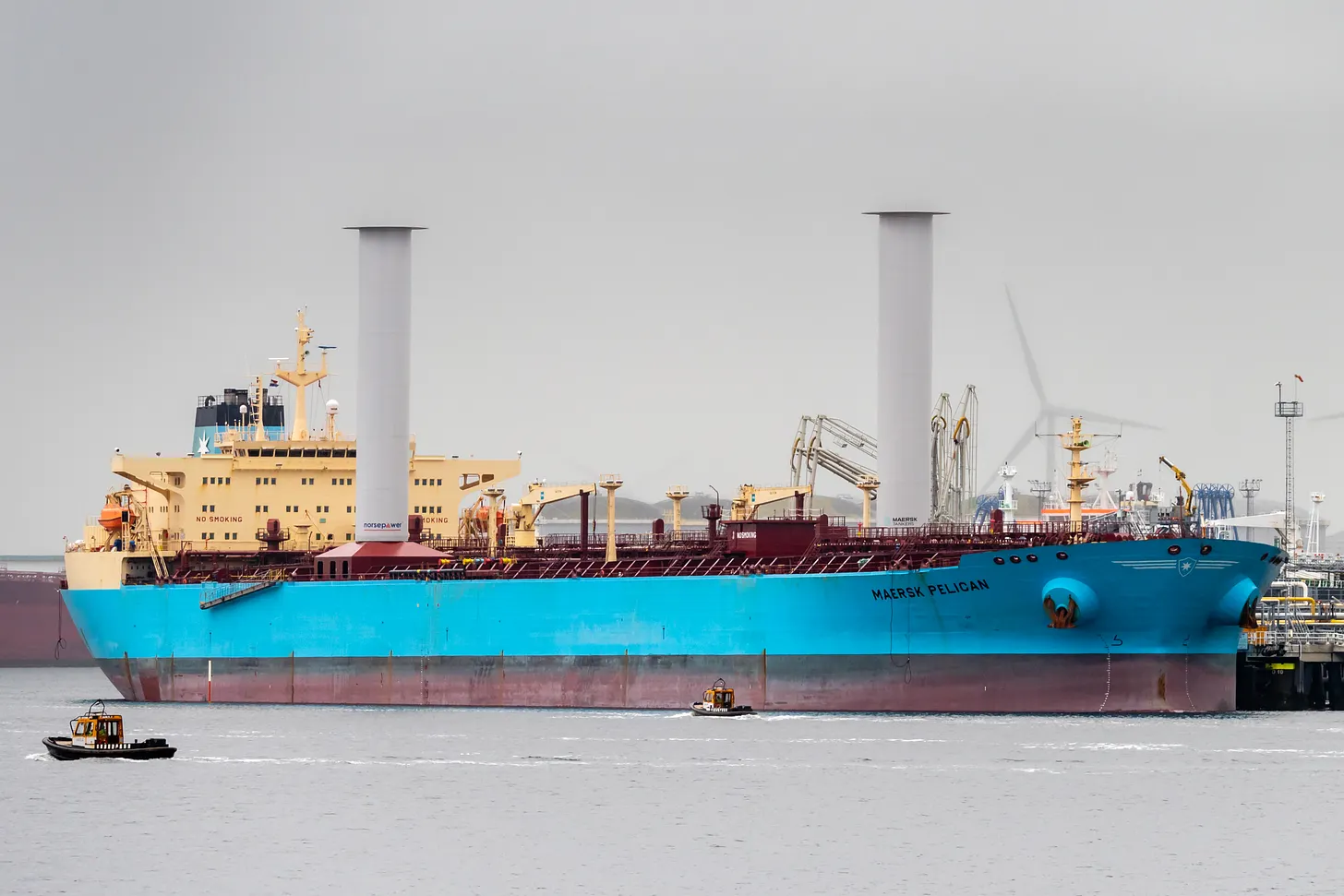
Another technology being developed is wind-assisted propulsion, which basically means using sails. Adding hard sails to ships can cut fuel use by up to 30 percent. The sails can be unfurled electronically and controlled from the bridge of the ship.
Of course, how much assistance the wind can give a ship depends on the number of sails it has and on the dimensions of those sails. Clearly, a container ship is less suitable for sails than one transporting iron ore or grain. Similarly, the prevalence of wind is crucial to the efficacy of sails. While weather forecasts can indicate the best routes to take to maximise exposure, there are some regions where there is very little wind.
At present, there are more than 20 commercial cargo ships worldwide that have been retrofitted with wind-assisted propulsion systems. The first purpose-built cargo ship commenced operations in 2024.
Of course, wind assistance and increased fuel efficiency aren’t going to eliminate emissions in the shipping industry. For that we need an entirely new fuel source.
One option is to use ‘green’ methanol. Methanol is an emissions-neutral fuel made from captured carbon dioxide and green hydrogen. It has the advantage of being usable in existing ships, as it can be stored in liquid form at room temperature. In addition, storage facilities are available at most of the world’s ports. The problem with methanol is that it is not readily available, and so is very expensive.
A better option is to use ammonia. Ammonia (NH3) is a compound of hydrogen and nitrogen, and can be manufactured relatively easily. If produced using ‘green’ hydrogen, it becomes a low-emissions fuel. In order to power the world’s ships with this energy source, production of ammonia would have to double, but that is perfectly feasible. Andrew ‘Twiggy’ Forrest’s company Fortescue has already converted one of its ships to run on a mixture of green ammonia and diesel. Another 100 ships are set to follow. Forrest sees this as a first step towards a fleet that runs entirely on green ammonia.
Hence, while complete decarbonisation of the shipping industry is still a long way off, it is achievable, and steps are already under way to make it happen.
Shipping is yet another sector that is difficult to decarbonise. It is responsible for 3 percent of global emissions – slightly more than aviation. Its importance to the global economy is inestimable, so we simply have to find a way to power ships with something other than fossil fuels.
Unfortunately, the simplest way to do this – electrification – won’t work for long-distance voyages. The problem is that batteries have very low energy density, meaning they have to be a lot heavier than a full tank of fuel in order to deliver the same amount of energy. In the case of an electric vehicle, the battery weighs 12 times more than a full fuel tank. To run an ocean-going vessel on electricity, the battery would need to be heavier than the maximum weight the ship could carry. Hence, battery-power is only usable for vessels that ply rivers, harbours and coastal waters, where they can be recharged regularly.
One option being pursued for ocean-going vessels is to increase their fuel efficiency. This can be done by ‘slow steaming’ (reducing engine speed) and by adding subsurface bulbs to ships’ bows, thereby reducing drag. These initiatives have reduced the carbon intensity of ships by 30 percent since 2008.
Another technology being developed is wind-assisted propulsion, which basically means using sails. Adding hard sails to ships can cut fuel use by up to 30 percent. The sails can be unfurled electronically and controlled from the bridge of the ship.
Of course, how much assistance the wind can give a ship depends on the number of sails it has and on the dimensions of those sails. Clearly, a container ship is less suitable for sails than one transporting iron ore or grain. Similarly, the prevalence of wind is crucial to the efficacy of sails. While weather forecasts can indicate the best routes to take to maximise exposure, there are some regions where there is very little wind.
At present, there are more than 20 commercial cargo ships worldwide that have been retrofitted with wind-assisted propulsion systems. The first purpose-built cargo ship commenced operations in 2024.
Of course, wind assistance and increased fuel efficiency aren’t going to eliminate emissions in the shipping industry. For that we need an entirely new fuel source.
One option is to use ‘green’ methanol. Methanol is an emissions-neutral fuel made from captured carbon dioxide and green hydrogen. It has the advantage of being usable in existing ships, as it can be stored in liquid form at room temperature. In addition, storage facilities are available at most of the world’s ports. The problem with methanol is that it is not readily available, and so is very expensive.
A better option is to use ammonia. Ammonia (NH3) is a compound of hydrogen and nitrogen, and can be manufactured relatively easily. If produced using ‘green’ hydrogen, it becomes a low-emissions fuel. In order to power the world’s ships with this energy source, production of ammonia would have to double, but that is perfectly feasible. Andrew ‘Twiggy’ Forrest’s company Fortescue has already converted one of its ships to run on a mixture of green ammonia and diesel. Another 100 ships are set to follow. Forrest sees this as a first step towards a fleet that runs entirely on green ammonia.
Hence, while complete decarbonisation of the shipping industry is still a long way off, it is achievable, and steps are already under way to make it happen.
Shipping is yet another sector that is difficult to decarbonise. It is responsible for 3 percent of global emissions – slightly more than aviation. Its importance to the global economy is inestimable, so we simply have to find a way to power ships with something other than fossil fuels.
Unfortunately, the simplest way to do this – electrification – won’t work for long-distance voyages. The problem is that batteries have very low energy density, meaning they have to be a lot heavier than a full tank of fuel in order to deliver the same amount of energy. In the case of an electric vehicle, the battery weighs 12 times more than a full fuel tank. To run an ocean-going vessel on electricity, the battery would need to be heavier than the maximum weight the ship could carry. Hence, battery-power is only usable for vessels that ply rivers, harbours and coastal waters, where they can be recharged regularly.
One option being pursued for ocean-going vessels is to increase their fuel efficiency. This can be done by ‘slow steaming’ (reducing engine speed) and by adding subsurface bulbs to ships’ bows, thereby reducing drag. These initiatives have reduced the carbon intensity of ships by 30 percent since 2008.
Another technology being developed is wind-assisted propulsion, which basically means using sails. Adding hard sails to ships can cut fuel use by up to 30 percent. The sails can be unfurled electronically and controlled from the bridge of the ship.
Of course, how much assistance the wind can give a ship depends on the number of sails it has and on the dimensions of those sails. Clearly, a container ship is less suitable for sails than one transporting iron ore or grain. Similarly, the prevalence of wind is crucial to the efficacy of sails. While weather forecasts can indicate the best routes to take to maximise exposure, there are some regions where there is very little wind.
At present, there are more than 20 commercial cargo ships worldwide that have been retrofitted with wind-assisted propulsion systems. The first purpose-built cargo ship commenced operations in 2024.
Of course, wind assistance and increased fuel efficiency aren’t going to eliminate emissions in the shipping industry. For that we need an entirely new fuel source.
One option is to use ‘green’ methanol. Methanol is an emissions-neutral fuel made from captured carbon dioxide and green hydrogen. It has the advantage of being usable in existing ships, as it can be stored in liquid form at room temperature. In addition, storage facilities are available at most of the world’s ports. The problem with methanol is that it is not readily available, and so is very expensive.
A better option is to use ammonia. Ammonia (NH3) is a compound of hydrogen and nitrogen, and can be manufactured relatively easily. If produced using ‘green’ hydrogen, it becomes a low-emissions fuel. In order to power the world’s ships with this energy source, production of ammonia would have to double, but that is perfectly feasible. Andrew ‘Twiggy’ Forrest’s company Fortescue has already converted one of its ships to run on a mixture of green ammonia and diesel. Another 100 ships are set to follow. Forrest sees this as a first step towards a fleet that runs entirely on green ammonia.
Hence, while complete decarbonisation of the shipping industry is still a long way off, it is achievable, and steps are already under way to make it happen.
Shipping is yet another sector that is difficult to decarbonise. It is responsible for 3 percent of global emissions – slightly more than aviation. Its importance to the global economy is inestimable, so we simply have to find a way to power ships with something other than fossil fuels.
Unfortunately, the simplest way to do this – electrification – won’t work for long-distance voyages. The problem is that batteries have very low energy density, meaning they have to be a lot heavier than a full tank of fuel in order to deliver the same amount of energy. In the case of an electric vehicle, the battery weighs 12 times more than a full fuel tank. To run an ocean-going vessel on electricity, the battery would need to be heavier than the maximum weight the ship could carry. Hence, battery-power is only usable for vessels that ply rivers, harbours and coastal waters, where they can be recharged regularly.
One option being pursued for ocean-going vessels is to increase their fuel efficiency. This can be done by ‘slow steaming’ (reducing engine speed) and by adding subsurface bulbs to ships’ bows, thereby reducing drag. These initiatives have reduced the carbon intensity of ships by 30 percent since 2008.
Another technology being developed is wind-assisted propulsion, which basically means using sails. Adding hard sails to ships can cut fuel use by up to 30 percent. The sails can be unfurled electronically and controlled from the bridge of the ship.
Of course, how much assistance the wind can give a ship depends on the number of sails it has and on the dimensions of those sails. Clearly, a container ship is less suitable for sails than one transporting iron ore or grain. Similarly, the prevalence of wind is crucial to the efficacy of sails. While weather forecasts can indicate the best routes to take to maximise exposure, there are some regions where there is very little wind.
At present, there are more than 20 commercial cargo ships worldwide that have been retrofitted with wind-assisted propulsion systems. The first purpose-built cargo ship commenced operations in 2024.
Of course, wind assistance and increased fuel efficiency aren’t going to eliminate emissions in the shipping industry. For that we need an entirely new fuel source.
One option is to use ‘green’ methanol. Methanol is an emissions-neutral fuel made from captured carbon dioxide and green hydrogen. It has the advantage of being usable in existing ships, as it can be stored in liquid form at room temperature. In addition, storage facilities are available at most of the world’s ports. The problem with methanol is that it is not readily available, and so is very expensive.
A better option is to use ammonia. Ammonia (NH3) is a compound of hydrogen and nitrogen, and can be manufactured relatively easily. If produced using ‘green’ hydrogen, it becomes a low-emissions fuel. In order to power the world’s ships with this energy source, production of ammonia would have to double, but that is perfectly feasible. Andrew ‘Twiggy’ Forrest’s company Fortescue has already converted one of its ships to run on a mixture of green ammonia and diesel. Another 100 ships are set to follow. Forrest sees this as a first step towards a fleet that runs entirely on green ammonia.
Hence, while complete decarbonisation of the shipping industry is still a long way off, it is achievable, and steps are already under way to make it happen.
Shipping is yet another sector that is difficult to decarbonise. It is responsible for 3 percent of global emissions – slightly more than aviation. Its importance to the global economy is inestimable, so we simply have to find a way to power ships with something other than fossil fuels.
Unfortunately, the simplest way to do this – electrification – won’t work for long-distance voyages. The problem is that batteries have very low energy density, meaning they have to be a lot heavier than a full tank of fuel in order to deliver the same amount of energy. In the case of an electric vehicle, the battery weighs 12 times more than a full fuel tank. To run an ocean-going vessel on electricity, the battery would need to be heavier than the maximum weight the ship could carry. Hence, battery-power is only usable for vessels that ply rivers, harbours and coastal waters, where they can be recharged regularly.
One option being pursued for ocean-going vessels is to increase their fuel efficiency. This can be done by ‘slow steaming’ (reducing engine speed) and by adding subsurface bulbs to ships’ bows, thereby reducing drag. These initiatives have reduced the carbon intensity of ships by 30 percent since 2008.
Another technology being developed is wind-assisted propulsion, which basically means using sails. Adding hard sails to ships can cut fuel use by up to 30 percent. The sails can be unfurled electronically and controlled from the bridge of the ship.
Of course, how much assistance the wind can give a ship depends on the number of sails it has and on the dimensions of those sails. Clearly, a container ship is less suitable for sails than one transporting iron ore or grain. Similarly, the prevalence of wind is crucial to the efficacy of sails. While weather forecasts can indicate the best routes to take to maximise exposure, there are some regions where there is very little wind.
At present, there are more than 20 commercial cargo ships worldwide that have been retrofitted with wind-assisted propulsion systems. The first purpose-built cargo ship commenced operations in 2024.
Of course, wind assistance and increased fuel efficiency aren’t going to eliminate emissions in the shipping industry. For that we need an entirely new fuel source.
One option is to use ‘green’ methanol. Methanol is an emissions-neutral fuel made from captured carbon dioxide and green hydrogen. It has the advantage of being usable in existing ships, as it can be stored in liquid form at room temperature. In addition, storage facilities are available at most of the world’s ports. The problem with methanol is that it is not readily available, and so is very expensive.
A better option is to use ammonia. Ammonia (NH3) is a compound of hydrogen and nitrogen, and can be manufactured relatively easily. If produced using ‘green’ hydrogen, it becomes a low-emissions fuel. In order to power the world’s ships with this energy source, production of ammonia would have to double, but that is perfectly feasible. Andrew ‘Twiggy’ Forrest’s company Fortescue has already converted one of its ships to run on a mixture of green ammonia and diesel. Another 100 ships are set to follow. Forrest sees this as a first step towards a fleet that runs entirely on green ammonia.
Hence, while complete decarbonisation of the shipping industry is still a long way off, it is achievable, and steps are already under way to make it happen.
A wind-assisted cargo ship, with sails furled.