The technology is already here, but it’s expensive.
The aviation industry is responsible for 2.6 percent of global emissions – small when compared with electricity generation and road transport, but significant nonetheless. Ten years ago, the prospect of rendering aviation climate friendly (or at least not climate unfriendly) did indeed seem daunting. Now, however, serious progress is being made.
One technology being pursued by aviation engineers is battery storage. The main problem with using a battery to power a plane is that it has to be a lot heavier than a fully loaded fuel tank in order to deliver the same amount of energy. In an EV, the battery weighs 12 times more than a full tank of petrol. EV manufacturers have overcome this problem partly as a result of the reduced engine weight of electric motors, and partly by increasing the weight of the car. The latter solution, however, is not viable with a large aeroplane. It is, however, an option in smaller planes that travel only short distances. There are already electric planes flying with a maximum range of 600 kilometres. It is envisaged that these would be used for flights of up to 250km. One advantage of using electricity is that it is significantly cheaper than aviation fuel. For planes carrying fewer than 30 passengers, it may prove to be a winner.
Another fuel source being pursued is hydrogen. An Australian company, AMSL Aero, is developing a light aircraft – the Vertiia – that is powered by a hydrogen fuel cell battery that will eventually have a 1,000 km range. The Vertiia takes off like a helicopter, but flies like a plane. The company is hoping to begin operations in 2027, with a prototype that has a 160km range.
Unfortunately, batteries are not currently viable for wide-bodied aircraft. A fuel source that is viable, however, is sustainable aviation fuel (SAF). SAF can be made from feedstock, vegetable oil, used cooking oil, algae and even household waste. It is carbon neutral, as it draws in CO2 when it’s produced (i.e. grown), then expels it when it’s burned. Using this fuel source can cut CO2 emissions by as much as 80 percent when compared with conventional aviation fuel.
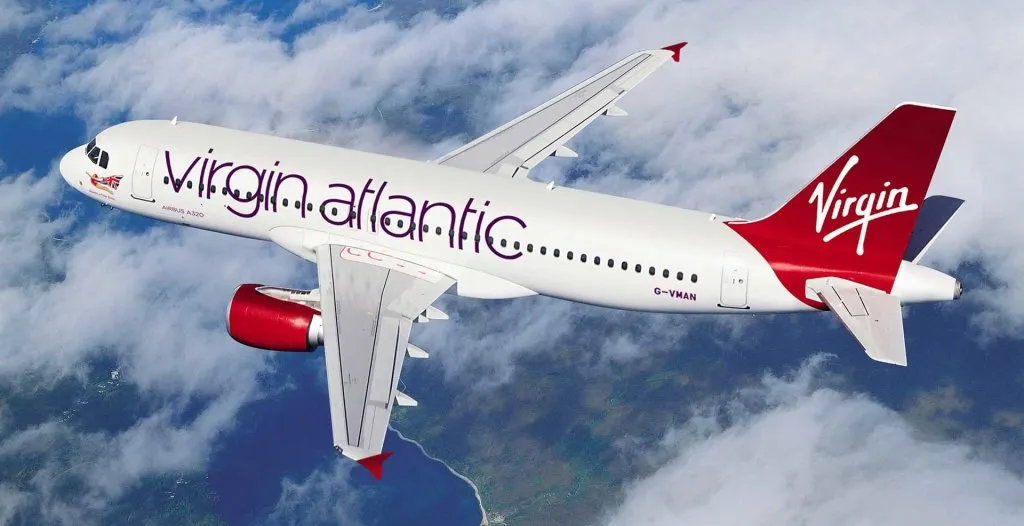
In November 2023 Virgin Atlantic became the first airline to fly across the Atlantic using 100 percent SAF – proof that it can be done. The biggest advantage of using this fuel source is that it can be used in the world’s wide-boded jets without them requiring any modification. The same goes with airport infrastructure. The biggest problem is that SAF is up to eight times more expensive than conventional aviation fuel. This does not mean that passengers would have to pay eight times more for their tickets, as fuel represents only about 20 percent of an airline’s costs. But does mean that fares would rise by about 140 percent – a not insignificant amount. As with all new technologies, of course, costs will fall once economies of scale can be achieved, but that is unlikely to occur before the mid 2030s.
Another problem with SAF is that there is not much of it around. Production would need to be increased 40-fold in order to meet expected demand by 2050, if aviation were to be completely decarbonised. And, of course, there is the question of how the SAF is manufactured. Care would have to be taken to ensure that forests were not cleared in order to grow feedstock.
Another option is to manufacture hybrid planes. These could be used while waiting for better technology to arrive. Hybrid planes would operate on battery power while taxiing on the ground and during decent, but would use aviation fuel or SAF during takeoff and in mid- flight.
All these technologies will be available at commercial rates in the 2030s. In the meantime, we need to concentrate on areas of the economy that can be decarbonised relatively cheaply – principally road transportation and the electricity grid. Fortunately, these sectors produce far more CO2 than aviation.