We can, but it won’t be cheap – not yet, at least.
Steel is a product we cannot do without in modern society. Unfortunately, it is also very damaging to the environment. The world produces 2.8 billion tonnes of it each year, and each of those tonnes results in two tonnes of CO2 emissions. This means that the steel industry belches 5.6 billion tonnes of CO2 into the atmosphere annually, or 11 percent of the global total. If we are to get to net zero, we must find alternative ways to make this all important metal.
Let’s start by looking at why steel is so polluting. The reason is that CO2 is emitted in all three stages of its production: the mining of iron ore and coal, the reduction of ore into metallic iron and the smelting of iron into steel.
The first of these processes is responsible for about 30 percent of steel’s emissions. Most of those emissions come from the use of fossil fuels to power the equipment used in mining. They can therefore be reduced, or eliminated entirely, by using renewable energy. This is not difficult to achieve, although it may be costly.
The same cannot be said for the second and third stages of the steel-making process.
The second stage is the reduction of iron ore into iron. Iron ore is a combination of iron and oxygen. The reduction process extracts the oxygen, leaving pure iron. The simplest way to achieve this is to heat the ore in a blast furnace, then add coke (a purified form of coal) and limestone. The oxygen in the ore combines with the carbon in the coke to form carbon dioxide, which is expelled into the atmosphere.
Another way to reduce the ore is to subject it to a mixture of hot gases – mainly carbon monoxide and hydrogen or natural gas. This process produces less CO2, but it is still very polluting.
The final stage in the process is when the iron is smelted into steel – either in a Basic Oxygen Furnace (BOF) or an Electric Arc Furnace (EAF). The latter produces less CO2, as electricity is used to generate the heat and much of the raw material used is scrap steel. (Scrap steel has already had its oxygen reduced when it was first smelted.)
Because most of the steel made in developed nations is recycled from scrap metal, the production process is far less polluting than it is in places like China and India (where very little scrap metal is available).
So, what is being done to make steel with a lower carbon footprint?
Various methods are currently being tried. One involves the use of ESFs, which are furnaces that can produce steel using electricity and hydrogen. If the electricity and hydrogen are produced using renewable energy, then CO2 emissions can be cut by more than 80 percent. The last 20 percent can be eliminated if biomass is used instead of coal, to provide the carbon content. [Biomass absorbs CO2 when produced, the emit it when burned. The whole process is carbon neutral.]
Another method being considered is to sequester the CO2 emitted by traditional blast furnaces and bury it underground – a process known as carbon capture and storage (CCS). This would prevent it from entering the atmosphere. The problem with CCS is that it is expensive. It would likely cost more than using ESFs, but it might be a useful stopgap measure until better technologies come along.
So much for the theory. What’s happing in practice?
Several European companies have announced plans to use ESFs in the future. One is ArcelorMittal, the world’s second largest producer of steel. It intends to make steel in its facility in Spain using hydro power. The Swedish power company Vattenfall plans to do something similar. Another Swedish company, HYBRIT, has supplied Volvo with the world’s first fossil-free steel. It intends to produce ‘green’ steel on an industrial scale by the end of 2026.
In Germany, ThyssenKrupp is committed to cutting emissions in its steelmaking operations by 30 percent by 2030, and by 100 percent by 2050.
These developments can’t come quickly enough. 70 percent of the world’s coal-based steelmaking capacity will reach the end of its operating life by 2030 and will have to be replaced. It is essential that this be with low-emissions technology.
The race is on, but we are still a long way away from the finish line. To hasten the process, government subsidies and regulations will be needed. Some of these are already in place in Europe, but they will have to be universal if we are to decarbonise the steel industry any time soon.
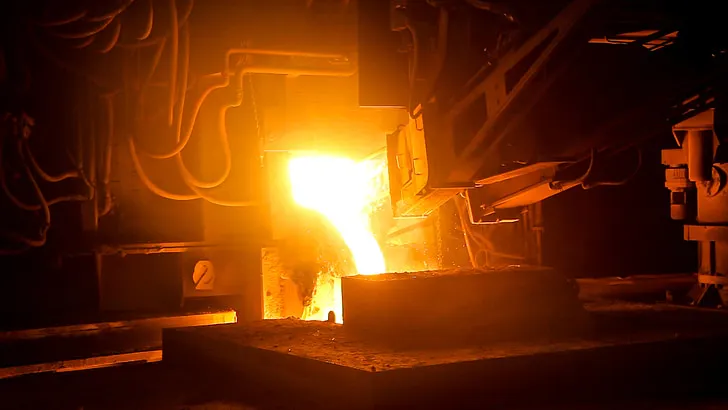
A traditional blast furnace, of the type that will need to be replaced over the next 25 years.